


Ambala, September 14
The government is providing assistance of up to Rs. 1,200 per acre to farmers for crop residue management and providing subsidies on agricultural machinery. In view of the paddy harvesting season, the district administration is running a comprehensive awareness campaign regarding crop residue management.
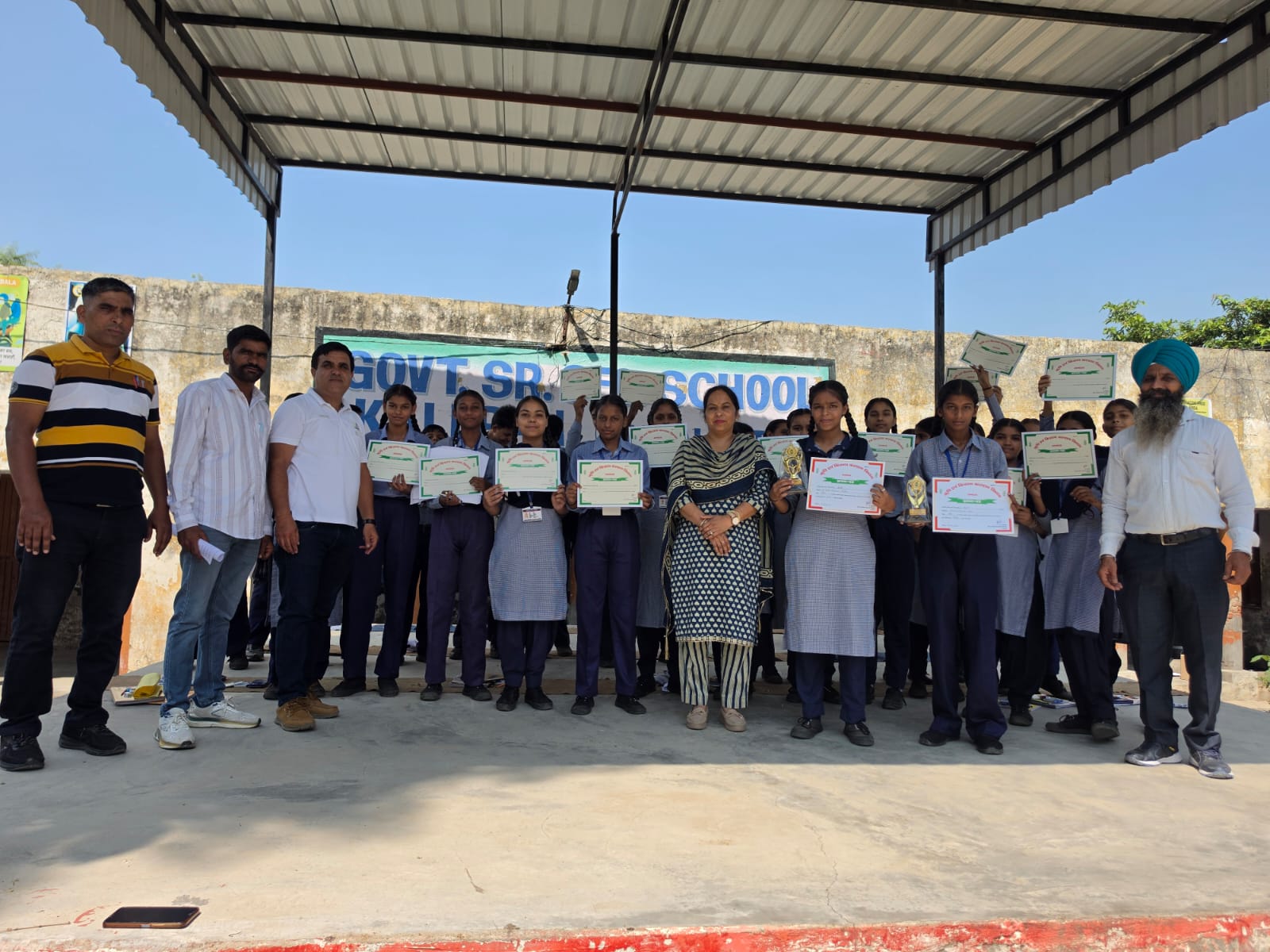
Under the campaign, farmers are being encouraged to manage paddy straw and other crop residues properly instead of burning them in the fields. To this end, the Agriculture Department, administration, and other related departments are organizing various awareness activities at the village level. In addition to making farmers aware of the harm caused by burning crop residues in the fields, they are also being informed about the facilities and subsidy schemes provided by the government, so that farmers can properly manage crop residues by adopting modern agricultural equipment and scientific methods. Drawing activities are being conducted in schools to raise awareness about crop residue management and the negative impacts of stubble burning. Drawing and other awareness activities are being conducted with students in various schools across the district.
The objective of these activities is to educate students about environmental protection, clean air, and proper management of crop residue. Through their drawings and paintings, students are conveying the message that crop residue should be properly managed instead of burning it in the fields. Students are also being informed that the smoke from stubble burning not only harms the environment but also increases air pollution and adversely affects human health, animals, and the surrounding environment.
Through these school activities, students are being prepared as ambassadors of awareness, inspiring them to encourage their families and surrounding farmers to avoid crop residue burning and to manage it properly. Village-level teams have been formed to effectively implement the crop residue management campaign. These teams are contacting farmers in their villages to educate them about crop residue management. Village-level teams are encouraging farmers to manage or utilize crop residue left in the fields after harvesting paddy, using available agricultural machinery and scientific techniques, rather than burning it. These teams are also monitoring the status of crop residue in the fields and providing farmers with timely information and guidance. The administration’s goal is to prevent incidents of crop residue burning with the cooperation of farmers and ensure a clean and pollution-free environment in the district.
The government provides a subsidy of up to ₹1,200 per acre for crop residue management.
The government has provided various incentives and assistance to encourage farmers to manage crop residues properly. Farmers are provided with a subsidy/incentive of ₹1,200 per acre for crop residue management, allowing them to achieve economic benefits by properly managing stubble instead of burning it. The Agriculture Department is educating farmers about this scheme and available facilities and encouraging them to adopt available options for crop residue management.
Subsidies are also available on agricultural machinery:
The government is also providing subsidies for providing modern agricultural machinery to farmers for crop residue management. Farmers are being encouraged to use agricultural equipment related to crop residue management as needed. Subsidies of up to 50 percent are being provided on crop residue management machinery, depending on eligibility and scheme provisions. Farmers have been urged to take advantage of available agricultural machinery and government schemes and manage crop residues scientifically instead of burning them. Farmers can obtain the necessary machinery and technical information for crop residue management by contacting the agricultural machinery, custom hiring centers, or relevant departmental officials in their villages.
Burning stubble has adverse effects on the environment and health:
The Agriculture Department and the District Administration are continuously educating farmers that burning crop residue is harmful to both the farm and the environment. The smoke emitted from stubble burning increases atmospheric pollution. This impacts air quality and can lead to numerous health problems, including respiratory difficulties. Furthermore, burning crop residue in the fields adversely affects soil fertility. Fire can destroy beneficial microorganisms and other nutrients in the soil. Therefore, farmers are being encouraged to incorporate crop residue into the soil or manage it using other available scientific methods instead of burning it. Action will be taken
against stubble burning as per the law:
The district administration has categorically appealed to farmers not to burn paddy residue/stuff in the fields under any circumstances. If a farmer burns paddy crop residue and the case is registered under the prescribed procedure, a negative entry will be made in the farmer’s records. In the event of such a violation, the farmer may be denied government benefits and agricultural schemes in the future, as per the established rules. According to the rules, farmers with such a violation may face restrictions or ineligibility to sell their crops for two years and may also face a loss of government scheme benefits. Furthermore, in cases of crop residue burning, FIRs may be filed, and a fine of up to ₹30,000 may be imposed, as per applicable rules. The administration has appealed to farmers to avoid any legal action by not burning crop residue in the fields after harvesting paddy and to manage it properly by taking advantage of available government schemes and agricultural machinery.
Appeal for Farmers’ Cooperation:
The District Administration and Agriculture Department have appealed to all farmers in the district to cooperate with the administration in the crop residue management campaign and come forward with the resolve to not burn stubble and save the environment. Instead of burning crop residue, farmers should use available machinery and scientific techniques. This will not only help reduce air pollution but also maintain soil quality and agricultural productivity. The administration has also appealed to farmers to take advantage of the information and guidance provided by village-level teams, Agriculture Department officials, and related staff. Farmers can contact their respective agriculture officers for any information or assistance. The District Administration has appealed to farmers to manage stubble properly instead of burning it, to take advantage of the assistance and machinery provided by the government, and to play their important role in environmental protection.
Crop residue management is not only the responsibility of the administration, but also the collective responsibility of every farmer and citizen. Only with the cooperation of farmers, incidents of burning of crop residue can be effectively stopped and the district can be made clean, healthy and pollution free.